

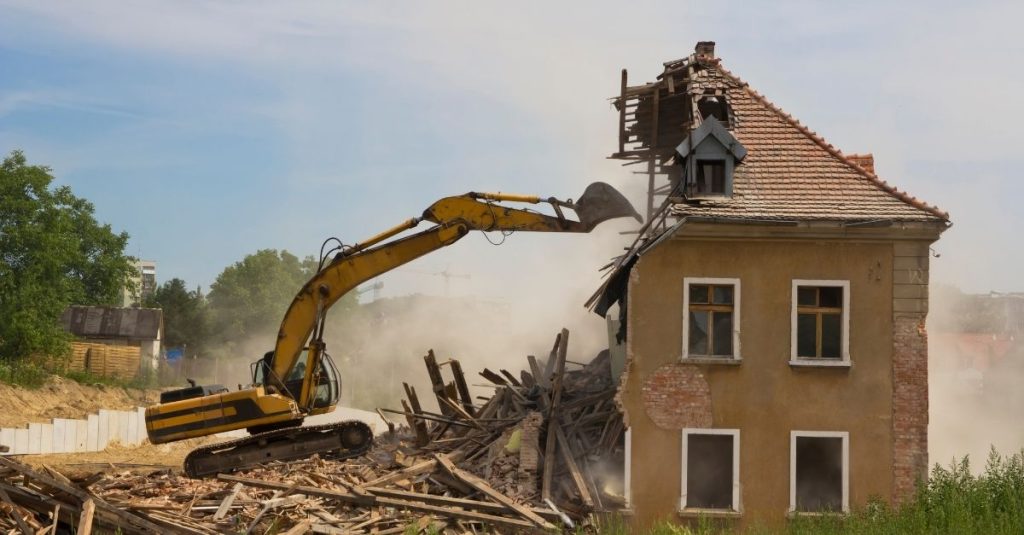
Demolition work can be a necessary and complex part of any building project. Whether it’s taking down a section of wall to make room for something else, or demolishing a whole structure completely, careful planning and specialist equipment are essential to move your project forward safely and legally. Without fully considering everything that goes into a demolition before beginning work, you could face serious delays, financial penalties, and safety risks. After all, demolition is the most high-risk activity in the construction sector.
 At AE Faulks, we’re a leading construction plant hire company supplying reliable machinery across the West Midlands and East Midlands. We understand the equipment demands of demolition projects, and in this guide, we discuss what you need to consider before you begin.
Understanding UK Demolition Regulations
Before selecting a demolition method or hiring equipment, you must understand the legal framework governing demolition work in the UK. These regulations exist to protect workers, the public, and adjacent properties.
Under CDM 2015, demolition is treated like any other construction work and applies to all demolition projects regardless of size. You must notify your local authority at least 6 weeks before starting demolition under Section 81 of the Building Act 1984. For buildings over 50 cubic metres, prior approval for the demolition method will be required.
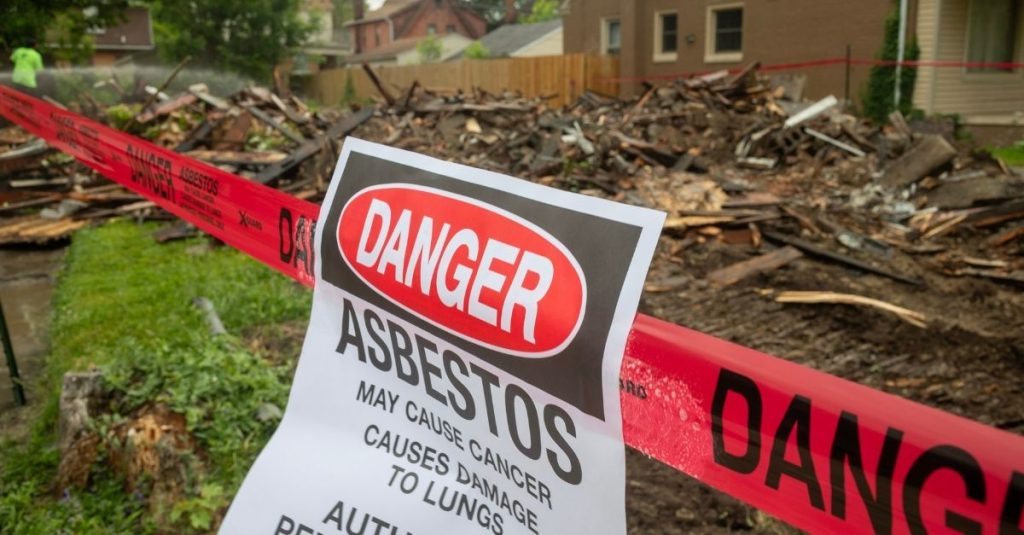
If your building was constructed before the late 1980s, asbestos is likely present. Under the Control of Asbestos Regulations 2012, asbestos surveys are mandatory before demolition, this is not optional and must be completed by a competent surveyor before work begins.
According to HSE demolition guidance, a principal designer must plan health and safety in the pre-construction phase, and a principal contractor must manage health and safety during demolition.
Methods of Demolition
Understanding different demolition methods helps you select the right approach, equipment, and machinery for your specific site conditions. The equipment you choose directly impacts timeline, safety, and cost, which is why selecting the right machinery from the outset is critical.
Machine Demolition (Most Common)
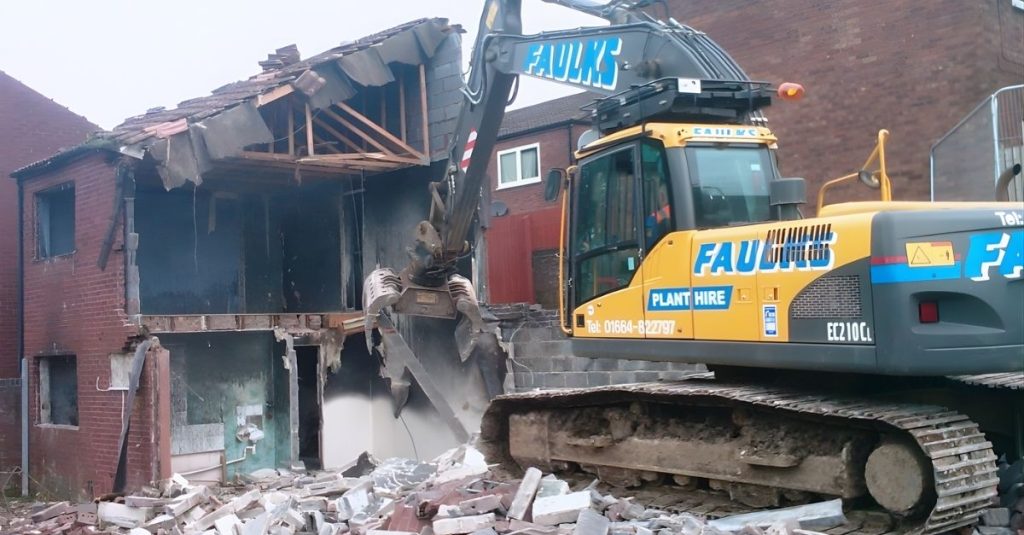
The most frequent method uses specialist machinery, significantly reducing the need for manual handling and eliminating risks associated with working at height. Machine demolition is faster, safer, and often more cost-effective than alternative methods. Common machinery used includes:
Tracked Excavators (13-14 tonnes): The workhorse of most demolition projects. These machines are fitted with hydraulic breakers (for concrete and masonry), crushing jaws, and shears. Tracked excavators provide excellent stability on uneven demolition sites and can operate effectively on soft or contaminated ground.
Mini Digger/Excavators (5-6 tonnes): Essential for precision work in confined spaces, around existing structures, or in residential areas where larger machinery cannot operate. Their smaller footprint means less site disruption and reduced damage to surrounding areas.
10t Dumptruck: Useful for transporting the rubble of demolition off site and keeps the area clean and manageable. Helps to have a place to put the rubble whist you are demolishing.
Hand Demolition
For smaller-scale projects or where site constraints prevent mechanical demolition—such as pedestrian access areas or conservation areas, hand demolition may be necessary. While labour-intensive, this method provides precision and control in sensitive environments.
Other Methods
Additional techniques include gas expansion bursters, hydraulic expansion bursters, and drilling and sawing. These are used for specific structural elements or sensitive applications.
Why Hire Rather Than Buy Machinery
For most demolition contractors, hiring machinery is more cost-effective than purchasing:
- No capital outlay: Equipment hire spreads costs across the project timeline rather than requiring large upfront investment
- Maintenance and reliability: Hired machinery is regularly serviced and maintained, reducing downtime. A breakdown on a demolition site can delay the entire project and increase costs significantly
- Operator expertise: Hiring operated machinery with a certified, trained operator: brings specialist knowledge to your site. Experienced demolition equipment operators understand how to work efficiently around structural constraints and adjacent properties
- Right-sizing: You can select equipment precisely matched to the task. Professional hire companies help specify the correct machinery combination for your specific demolition
- Insurance and compliance: Hire companies ensure machinery is certified for UK operation and properly insured, removing legal liability from your shoulders
Structural Assessment and Safety Planning
Before demolition commences, you must conduct a thorough structural assessment. According to HSE guidance on structural stability, a competent person should complete a full survey considering the age, type of construction, previous use, structural form, proximity to adjacent buildings, and stability-sensitive elements.
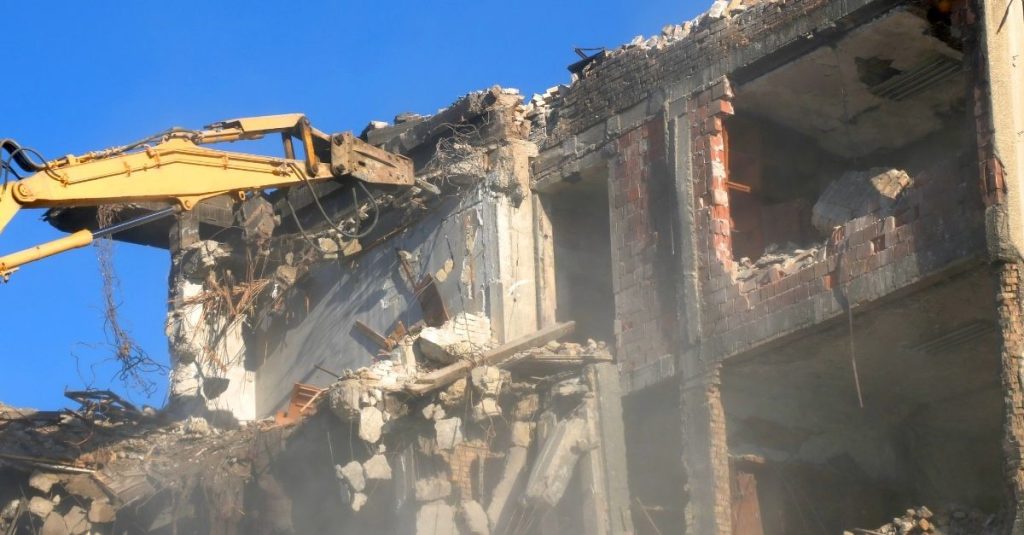
The HSE sets out key preparation procedures: site compound and security set-up, intrusive pre-demolition surveys, utility isolation, hazardous material removal (particularly asbestos removal in accordance with relevant regulations), soft strip, superstructure demolition, waste processing, slab and foundation demolition, and final site finishes.
Planning Timelines and Equipment Selection
If you must complete a project in a hurry, demolition is not advised. It is a precarious process and should be undertaken slowly under best building practices. A rushed job carries many risks, including worker safety, structural collapse, and regulatory breaches.
The most successful demolition projects begin with a detailed equipment plan. Before work starts, understand what machinery will be needed and in what sequence, site access and spatial constraints, waste management requirements, and surrounding site constraints. A professional plant hire company can guide you through these decisions and provide machinery precisely matched to your project requirements.
Managing Demolition Waste
You are legally required to properly manage waste using the waste management hierarchy: reduce, reuse, and recycle before disposal. Waste is classified as hazardous (containing asbestos, coal tar, or other hazardous substances) or non-hazardous (untreated materials, uncontaminated glass, metals, etc.).
On-site waste processing using crushing attachments on excavators can significantly reduce disposal volume and cost.
Is Demolition Actually Necessary?
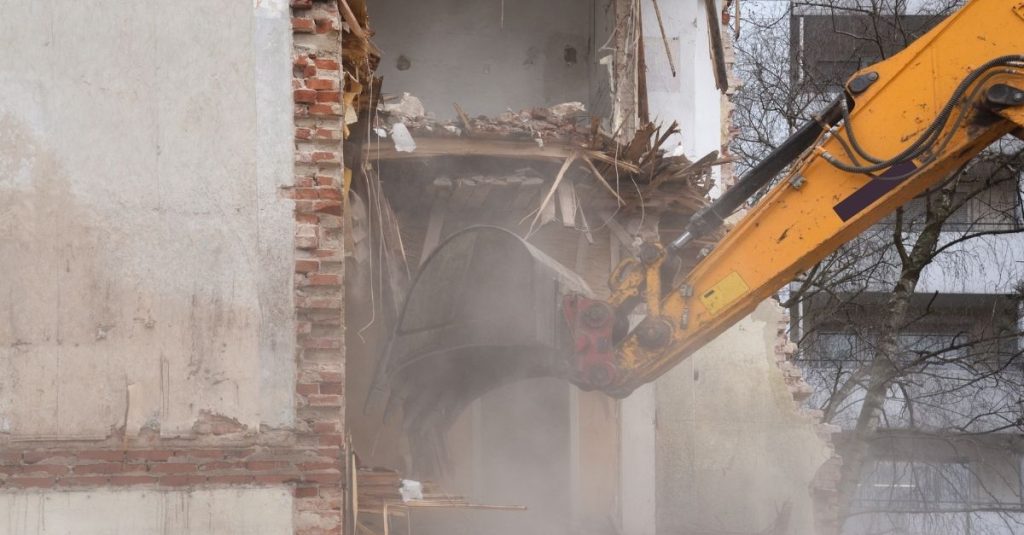
Before committing to demolition, ask yourself: is this work truly necessary? Demolition should be a last resort. Consider whether structural repairs, partial demolition, repurposing, or deconstruction could achieve your project goals.
Getting Professional Support
If you’re planning a demolition project in the Midlands and need specialist machinery, contact us to discuss your equipment requirements. We supply modern, well-maintained machinery for both operated and self-drive hire.